Basal cell carcinoma · Skin
Basal cell carcinoma. Removed, confirmed, repaired.
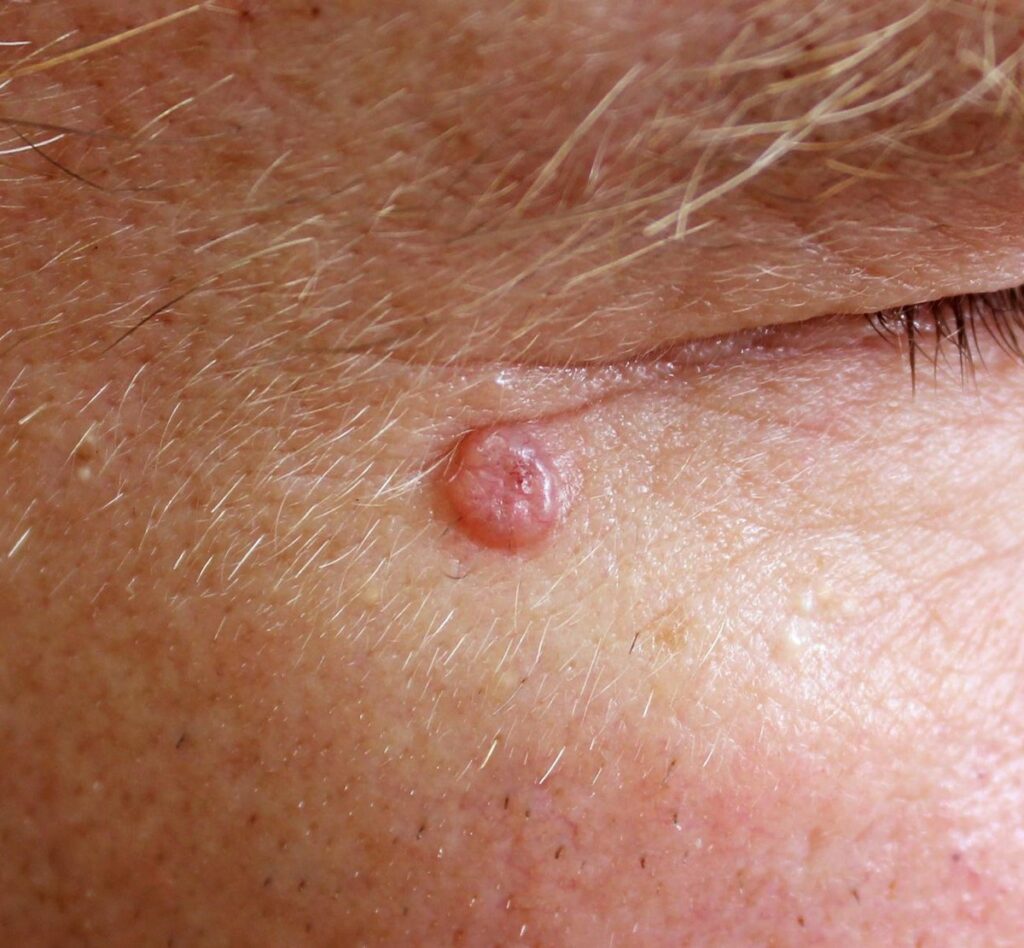
Basal cell carcinoma is the most common skin cancer in the UK and one of the least dangerous: it almost never spreads, but left alone it grows into the skin around it. Dr Ouali removes it with a margin under local anaesthetic, repairs the skin with a plastic surgeon's care, and confirms with the laboratory that it has all gone.
Results
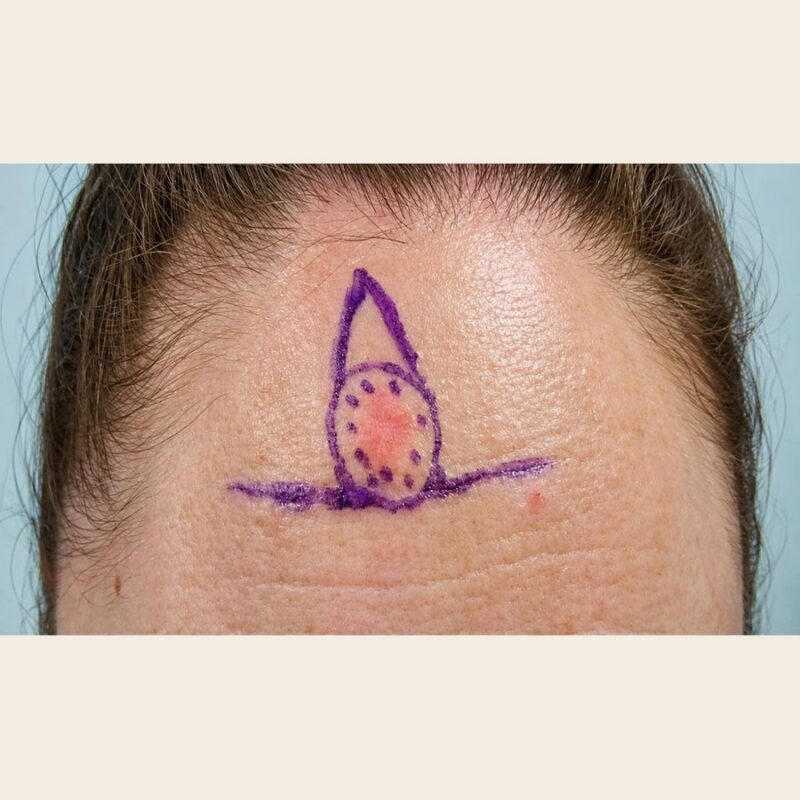
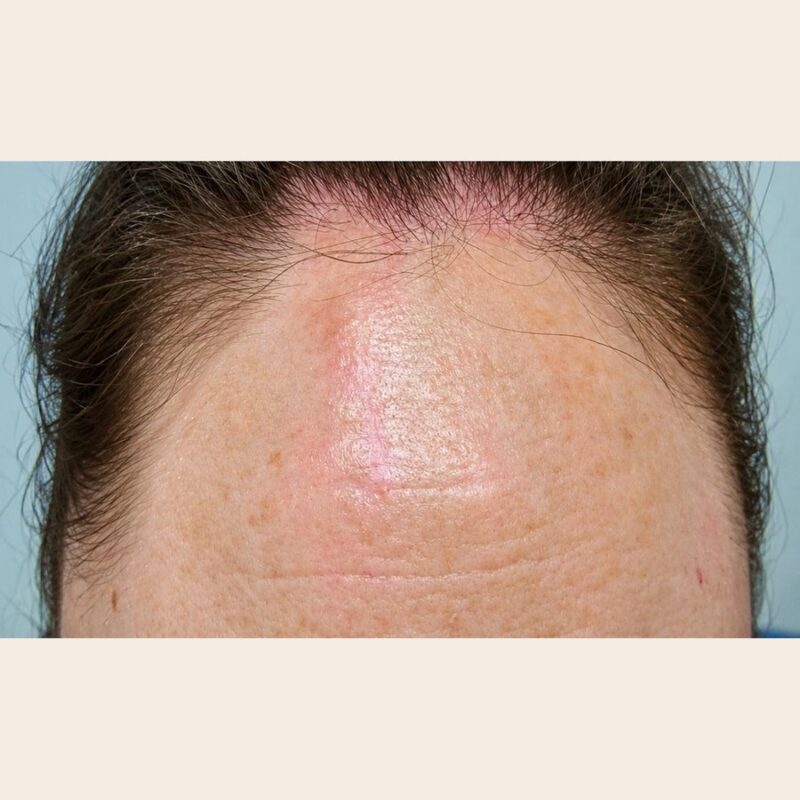
Before and after.
We show only a small selection of results, with each patient's written consent, and never ask patients to share their photographs. Results vary from person to person.
 Before
 After
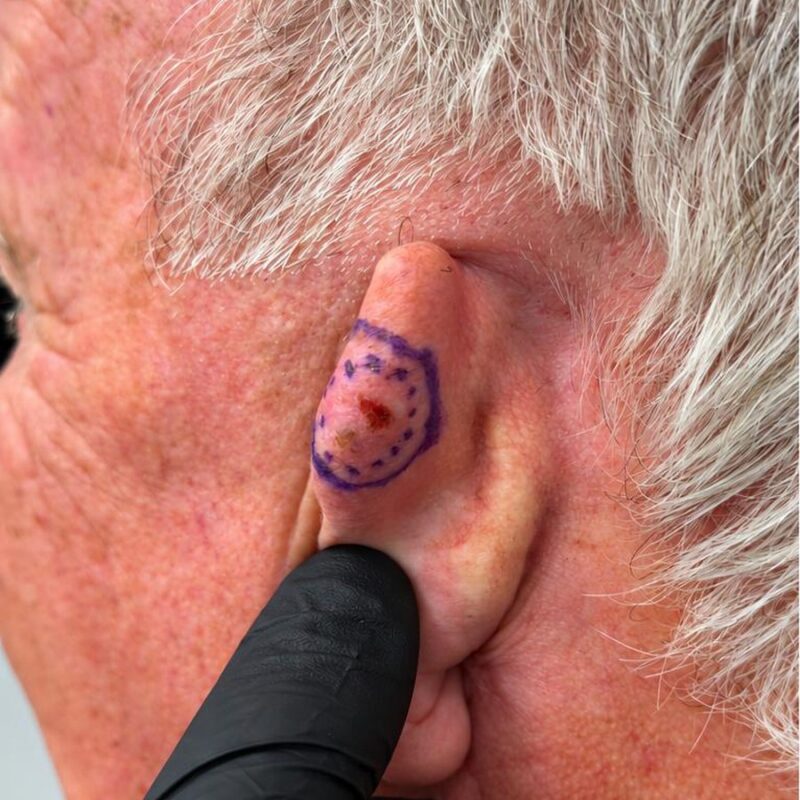 Before
 After
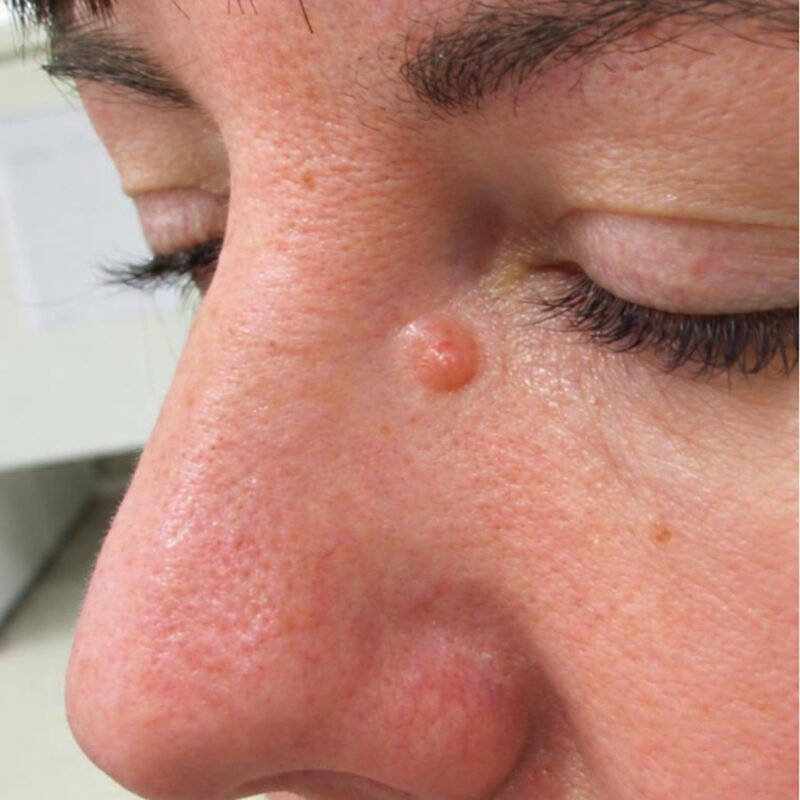 Before
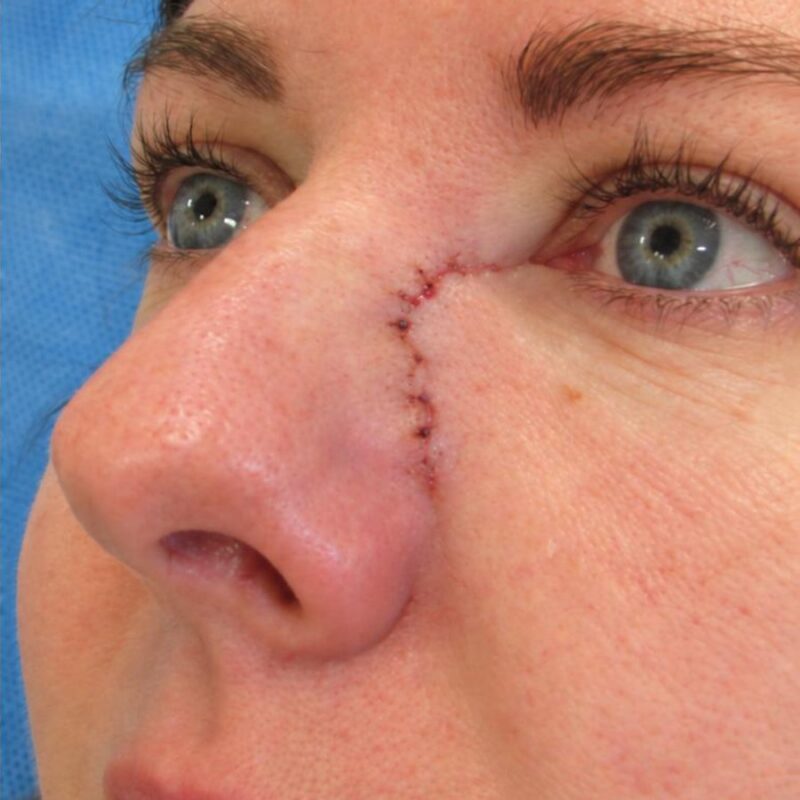 After
About the condition
Common, slow, and treatable.
Basal cell carcinoma, or BCC, arises from cells in the deepest layer of the skin’s surface and is linked to years of sun exposure. It appears most often on the face, ears, scalp and neck of people over 50, as a pearly or pink bump, a flat scaly patch, a small sore that does not heal, or a pale scar-like area. It grows slowly and rarely hurts, which is why it often goes unnoticed for months.
BCC very rarely spreads elsewhere in the body, but it does not go away, and over time it erodes the skin and tissue around it. Treated early, it is removed with a small scar. Left for years, particularly around the nose, eyes or ears, it can need a far larger repair. If you have a spot that fits the description above, have it looked at.
Diagnosis is made by examining the lesion and, where there is doubt, by taking a small biopsy for the laboratory. If you already have a confirmed diagnosis from your GP or dermatologist, bring the report. Dr Ouali will also tell you if a lesion needs a dermatologist’s assessment first, or if another treatment would suit it better than surgery.
Treatment is surgical excision. Under local anaesthetic, the BCC is removed with a margin of normal-looking skin around it, usually a few millimetres, and the wound is closed directly, or where the skin is tight, with a local flap or skin graft. Everything removed goes to the laboratory, which confirms the diagnosis and checks that the margins are clear. You are told the result, in plain terms, within a few weeks.

Is it right for you?
You should be seen if
Some BCCs, particularly superficial ones or those in difficult sites, may be better treated with creams, freezing or Mohs micrographic surgery, and some lesions are not BCCs at all. If a dermatologist's opinion is needed first, Dr Ouali will say so and refer you.
Your journey
What to expect.
Consultation
A complimentary video consultation with Dr Ouali, private and unhurried. Over video, with photographs if helpful, he looks at the lesion, arranges a biopsy if the diagnosis is not already confirmed, and explains how it would be removed and how the skin would be repaired. If you would rather meet in person at Langham Hospital first, that can be arranged; a consultation fee applies.
The procedure
Carried out under local anaesthetic in 30 to 60 minutes, longer if a flap or graft is needed. The BCC is removed with a margin and sent to the laboratory. The wound is closed with fine stitches and dressed, and you walk out.
The first two weeks
Keep the wound dry for 48 hours and clean gently after that. Stitches come out at 5 to 14 days depending on the site. Avoid strenuous exercise and stretching of the area, and keep the wound covered from the sun.
The result
The laboratory report follows within a few weeks and Dr Ouali explains it to you. The scar is pink at first and fades over 12 to 24 months. Having had one BCC raises the chance of another, so a yearly skin check and sun protection are sensible from here on.
Risks and safety
Told to you plainly.
Excision is the standard treatment for most basal cell carcinomas and has a high cure rate, but no surgery is without risk, and Dr Ouali will go through each of these with you before you decide.
Common and temporary: swelling, bruising, tenderness and numbness around the wound. Uncommon: bleeding, infection, slow healing or the wound edges parting, a scar that is wider, thicker or more visible than hoped, particularly on the face, or partial loss of a skin graft. Rarely, the laboratory finds tumour at the edge of what was removed and a further excision is needed, or the BCC returns at the same site in later years.
Good to know
- Anaesthetic
- Local
- Duration
- 30 to 60 minutes
- Stay
- Walk in, walk out
- Back to work
- 1 to 2 days, depending on site
- Results
- Histology confirms removal
Every procedure is planned around you. These are typical figures; Dr Ouali will confirm what applies in your case at your consultation.
Ask a question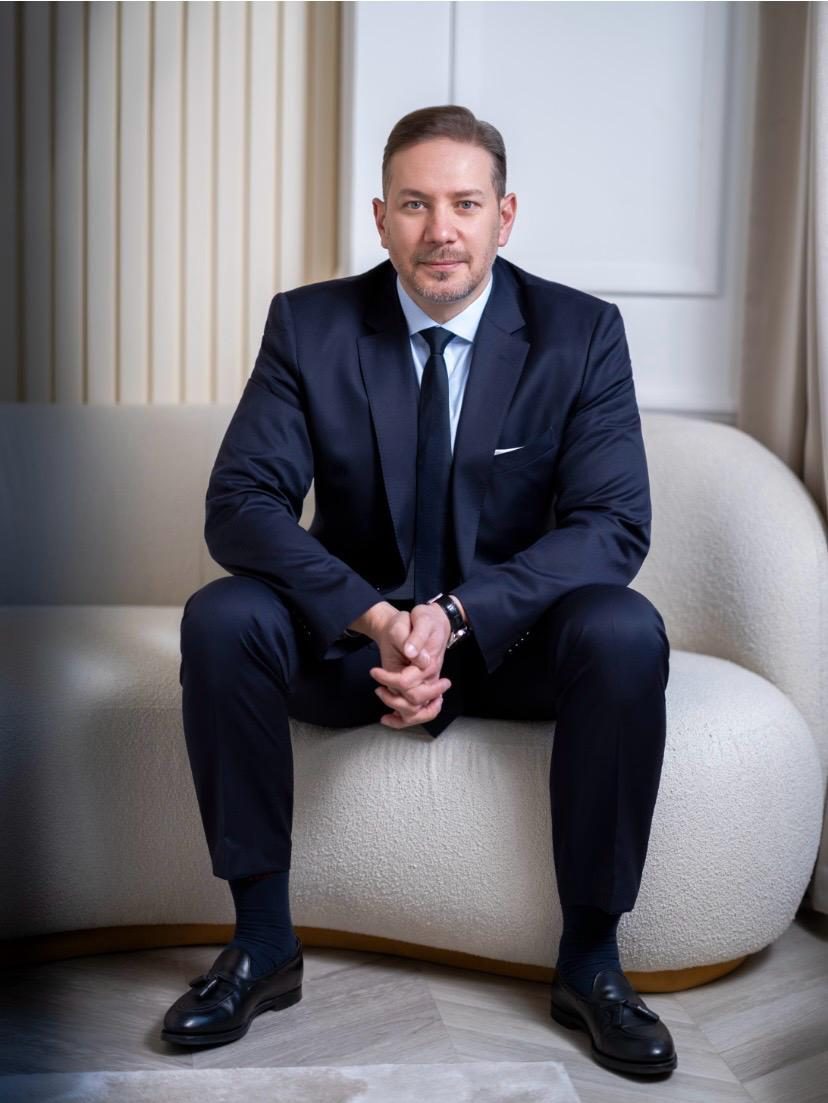
Your surgeon
Skin cancer surgery with Dr Braham Ouali.
Dr Ouali's ten years of NHS plastic surgery training included a great deal of skin cancer work, and he has removed and reconstructed thousands of basal cell carcinomas, many on the nose, ears and around the eyes. The two aims are not in conflict: complete removal, confirmed by the laboratory, and a repair that in time is hard to see.
Your consultation is private and unhurried. He will tell you plainly what surgery can achieve and what it cannot, and you will never be hurried towards a decision. From the first conversation to your final review, you are supported at every stage, and you always know who to turn to.
Where you will be treated
Langham Hospital, Hallam Street.
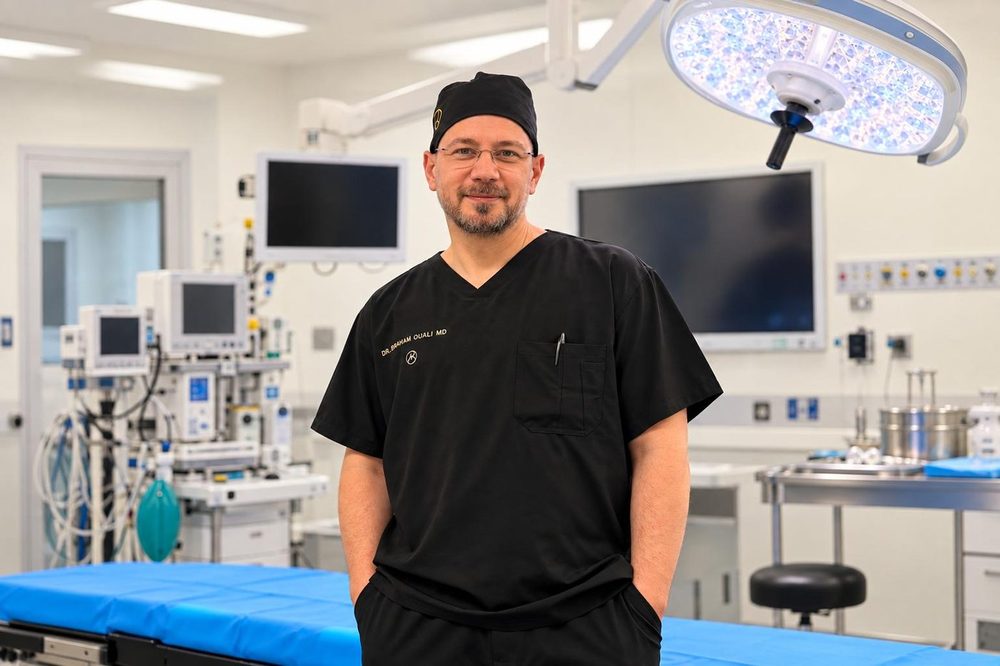
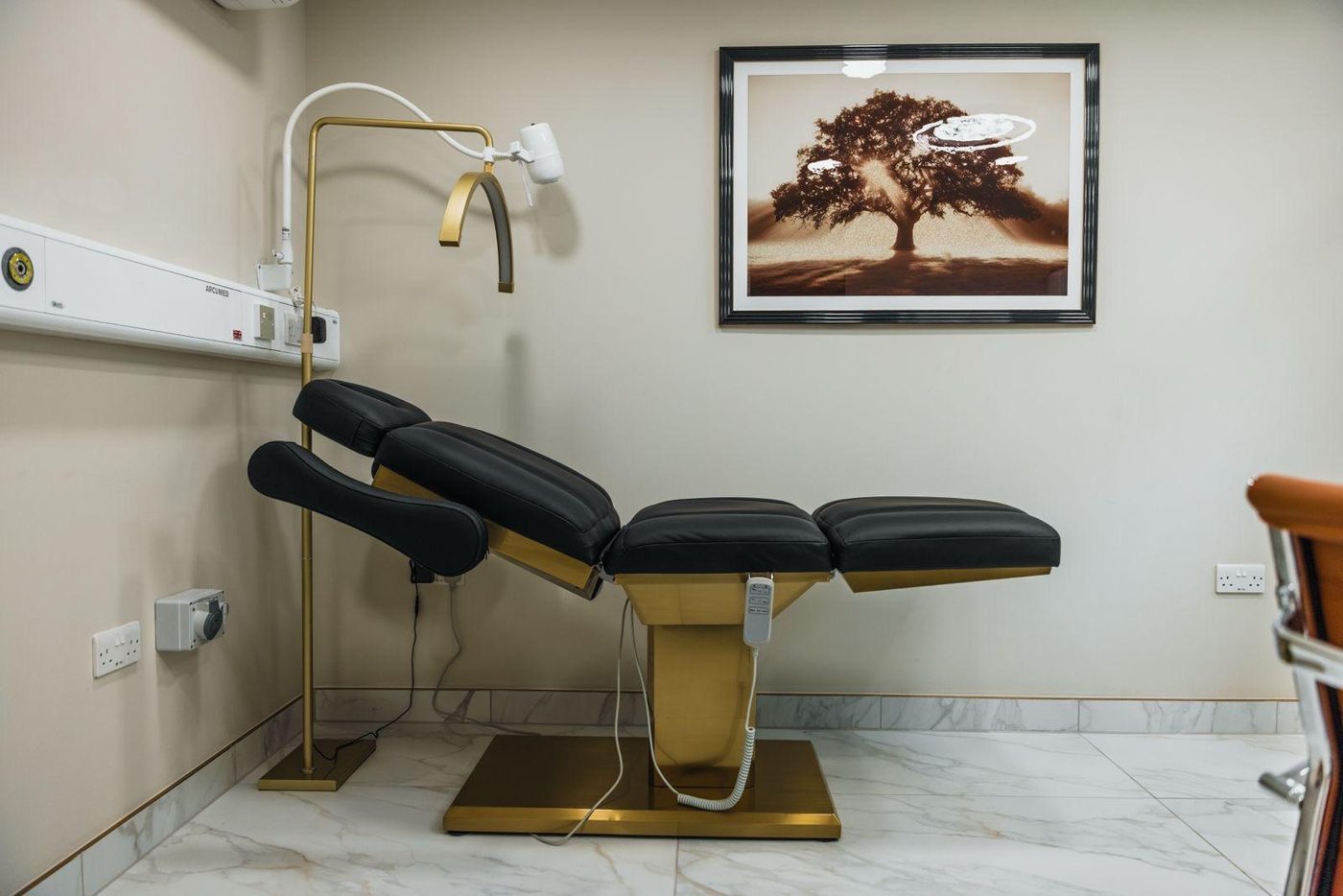
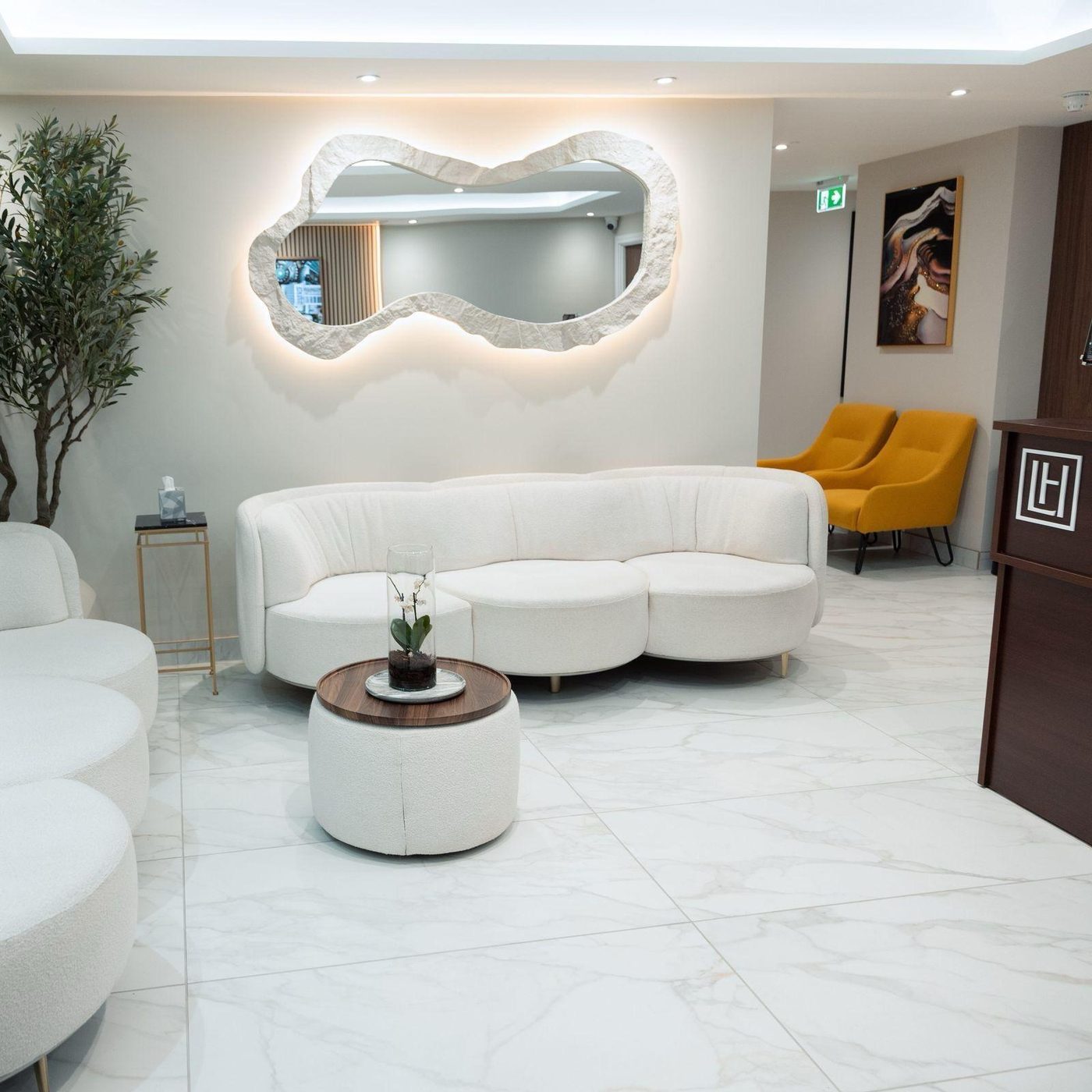
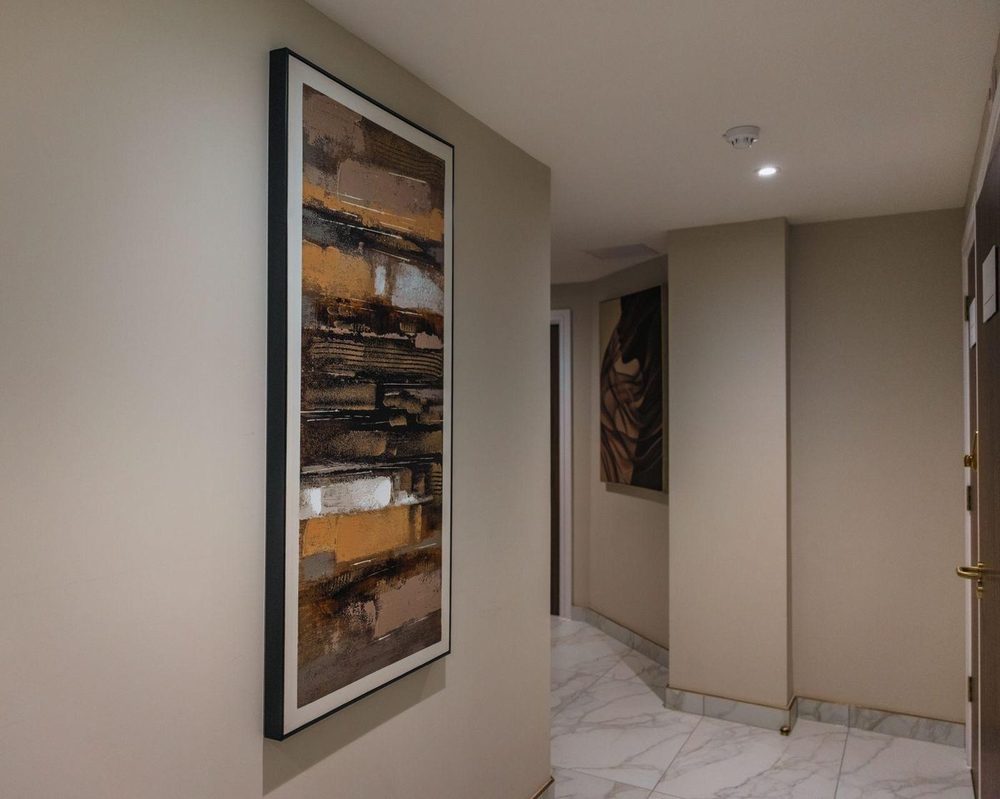
Dr Ouali consults and operates at Langham Hospital, a private hospital a few minutes' walk from Harley Street. Calm, modern and entirely discreet, with consulting rooms, treatment rooms and operating theatres under one roof.
Patient stories
In their own words.
Thank you so much for such an excellent operation which you performed to remove a BCC from my nose recently. It is now some eight weeks and the wound has healed beautifully.
Thank you and your caring theatre staff for the skilled treatment I received when a BCC was removed from my nose and a skin graft used to reconstruct the wound. The site has now returned to the state where, with some make-up, it is not noticeable.
The healing process has been excellent, with minimal scarring thanks to your skill and expertise. The entire experience has been an outstanding success.
Common questions
What patients ask.
How do I know it is a basal cell carcinoma?
By examination and, where there is any doubt, a small biopsy sent to the laboratory. If you already have a diagnosis from your GP or dermatologist, bring the report. Dr Ouali will not remove a lesion as a BCC without being clear what it is.
Is surgery the only treatment?
It is the most common and, for most BCCs, the most reliable. Some superficial BCCs can be treated with creams or freezing, and some in difficult sites are better treated with Mohs micrographic surgery by a dermatological surgeon. Dr Ouali will tell you if another route would suit you better.
What happens to the tissue that is removed?
All of it goes to a histopathology laboratory. The report confirms the diagnosis, the type of BCC and whether the margins around it are clear. You are told the result, in plain terms, within a few weeks.
What if the margins are not clear?
Occasionally the report shows tumour cells at or near the edge of what was removed. Dr Ouali will discuss this with you and usually recommend a further, smaller excision of the affected edge. It is a known part of skin cancer surgery, not a failure of it.
Will I have a scar?
Yes. The size depends on the size and site of the BCC and whether a flap or graft was needed to close the wound. Dr Ouali places the scar along the natural lines of the face wherever possible, and it fades over one to two years.
Can a BCC come back?
If it is completely removed, recurrence at the same site is uncommon. Having had one BCC, however, makes it more likely you will develop another elsewhere, so yearly skin checks and daily sun protection matter.
Can I have a BCC removed on the NHS?
Yes. BCC is a skin cancer and the NHS treats it, usually through a dermatology referral from your GP. Many people come to Dr Ouali to be seen and treated sooner, or to have the repair done by a plastic surgeon, particularly on the face.
I am flying in from abroad. How long should I stay?
Plan to be in London for 7 to 14 days so the stitches can be removed and the wound checked before you fly. The laboratory report can be discussed by video once you are home.
Complimentary virtual consultations
Begin with a conversation.
Your first consultation is complimentary and takes place by video, with no obligation and no hurry. Tell us a little about what you are considering, and we will arrange a time to talk.